Still Performing
Florian Aschka & Larissa Kopp, Andy Kassier, Milena Wojhan
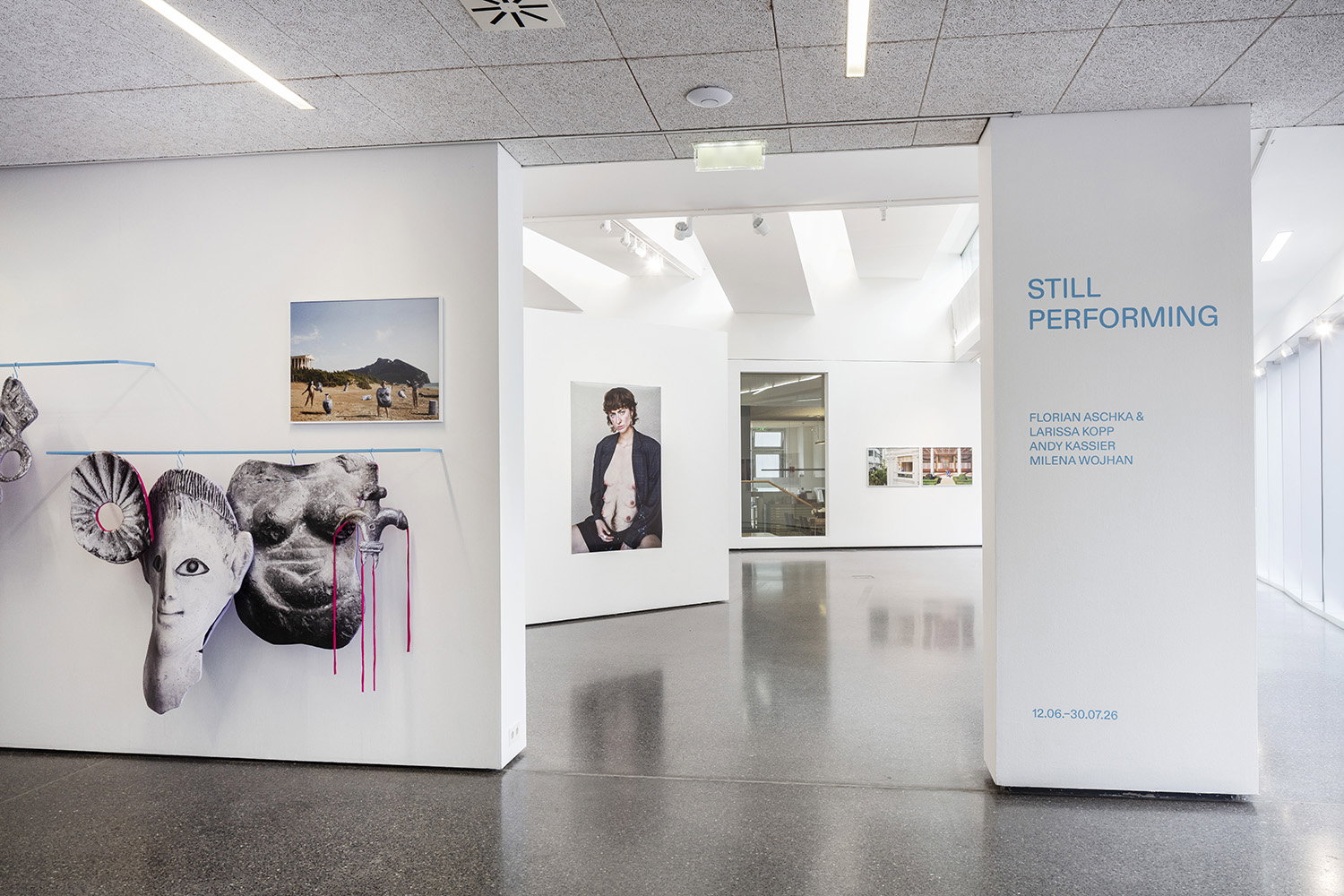
With “Still Performing”, FOTOHOF presents three artistic positions in which performance and photography are closely intertwined. While “still” refers to the photographic image, the frozen moment, or the cinematic still frame, “still performing” simultaneously signifies an ongoing action. Photography appears here not merely as documentation of artistic performances, but as a snapshot of a continuing performative process in which social roles and identities are made visible and negotiated.
From a theoretical perspective, identity is not a fixed characteristic but something that emerges through repeated bodily, linguistic, and social actions. Gender, belonging, and the roles associated with them are shaped by social and cultural codes. Through facial expressions, gestures, poses, or clothing, these codes are communicated and performatively reaffirmed in everyday life. These performative actions do not merely represent identity; they actively produce it. At the same time, these processes are always connected to social norms and questions of visibility and conformity.
With this in mind, the exhibition brings together works by Florian Aschka & Larissa Kopp, Andy Kassier and Milena Wojhan, who investigate identity in different contexts through performance and photography. Their works question traditional narratives and social role models as well as mechanisms of media visibility and the influence of digital image cultures on our notions of the self. Architectural and landscape settings are appropriated as stages; poses and costumes are deconstructed; masks, as well as strategies such as estrangement and repetition, are employed to reveal political positions that invite critical discourse.
Andy Kassier
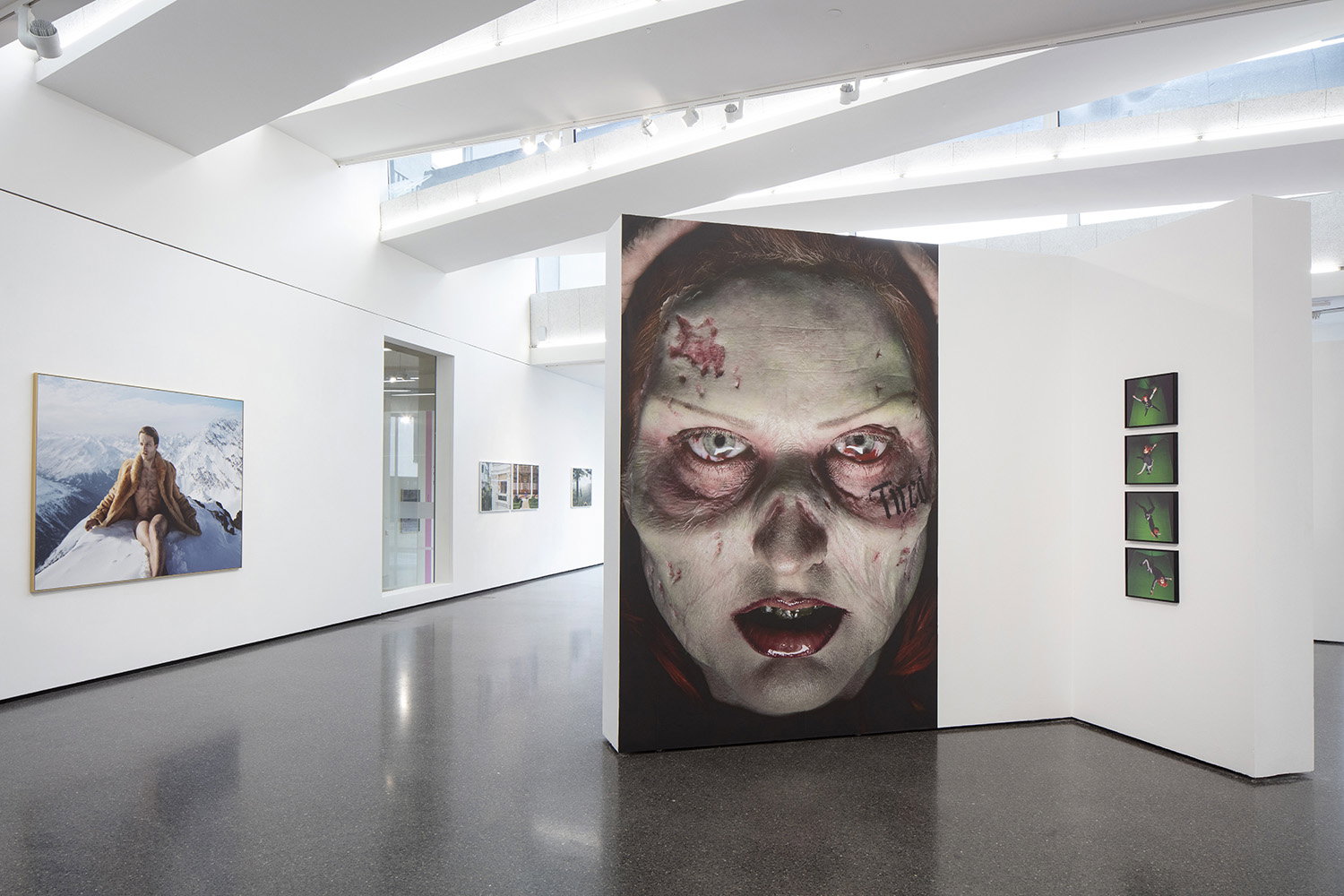
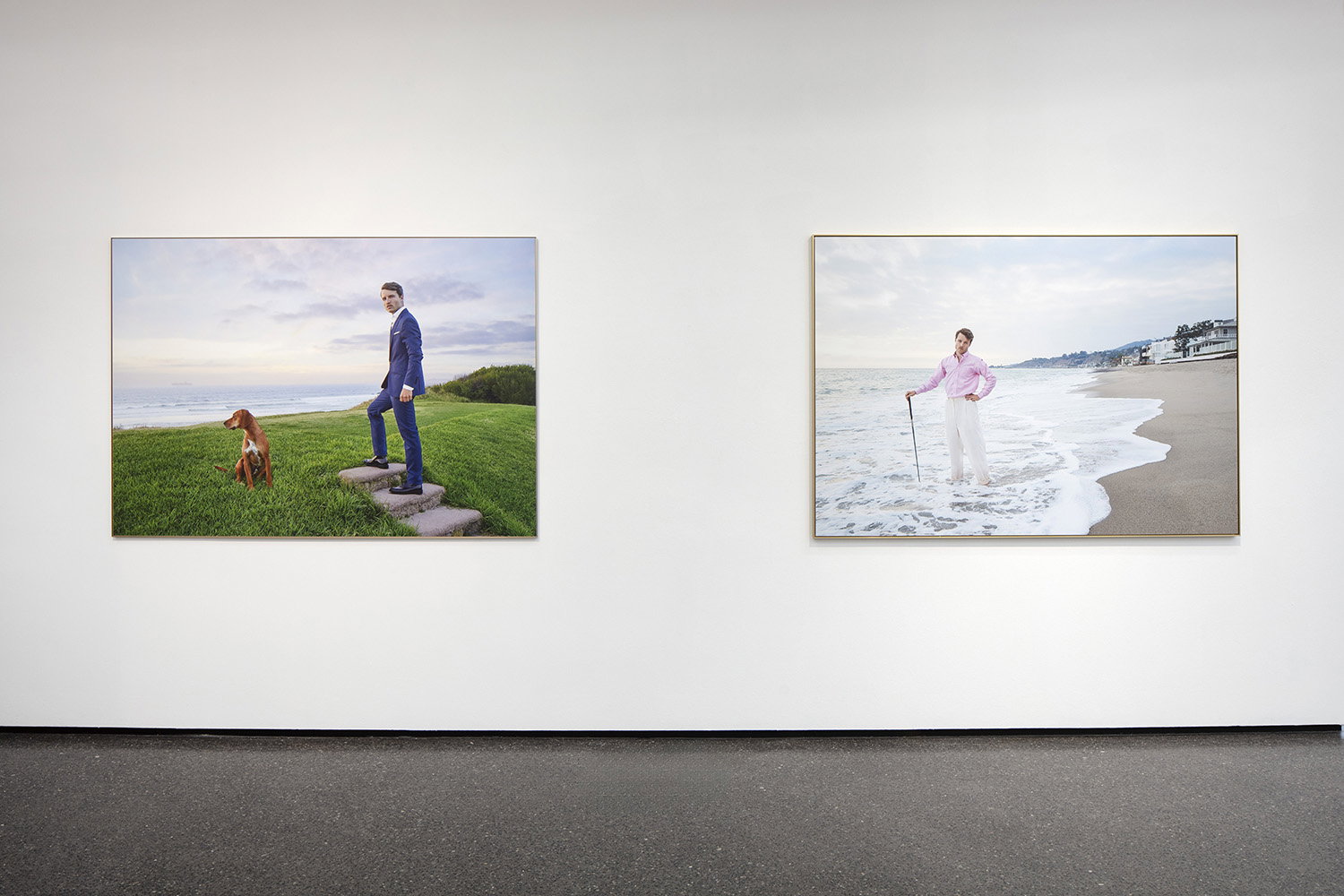
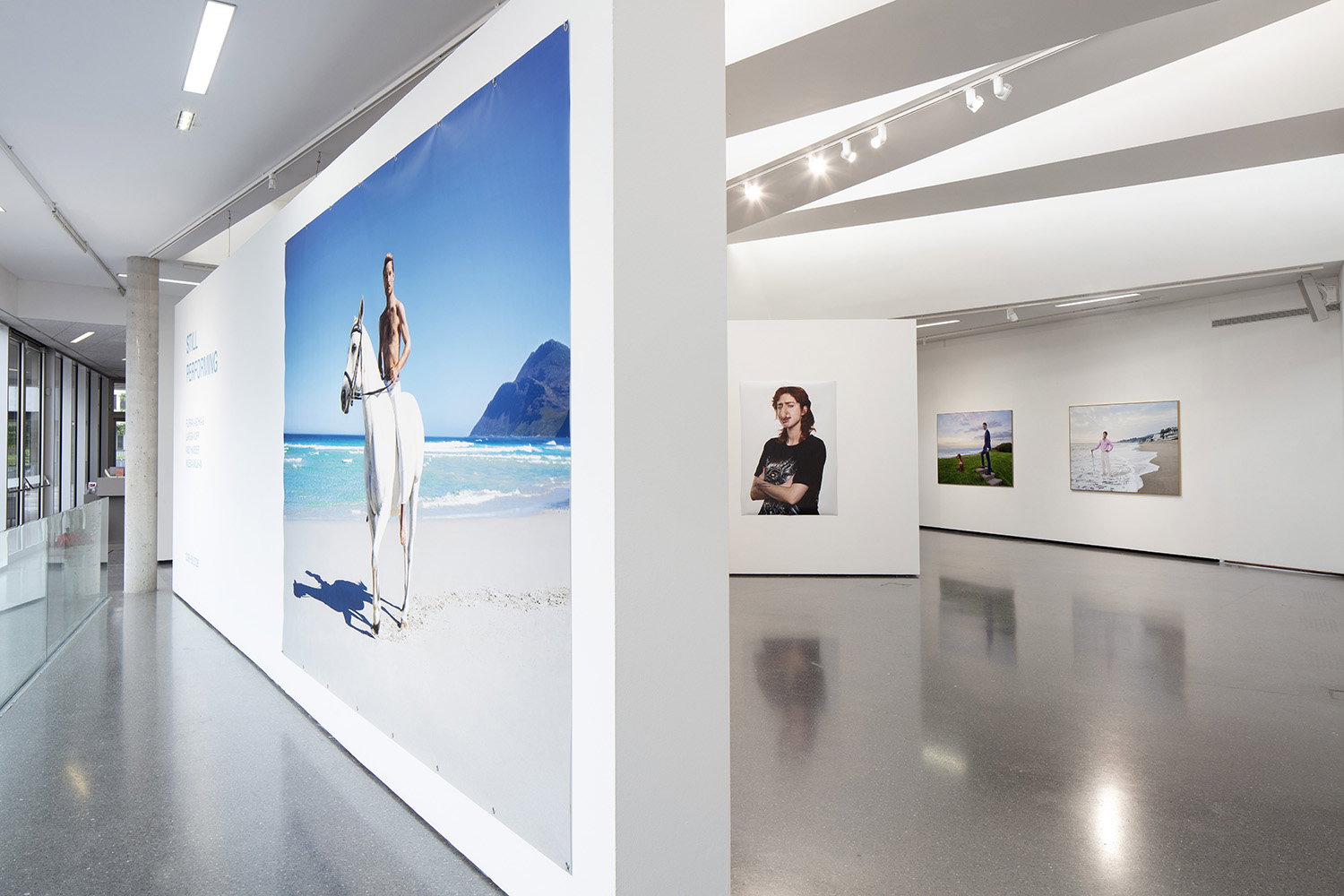
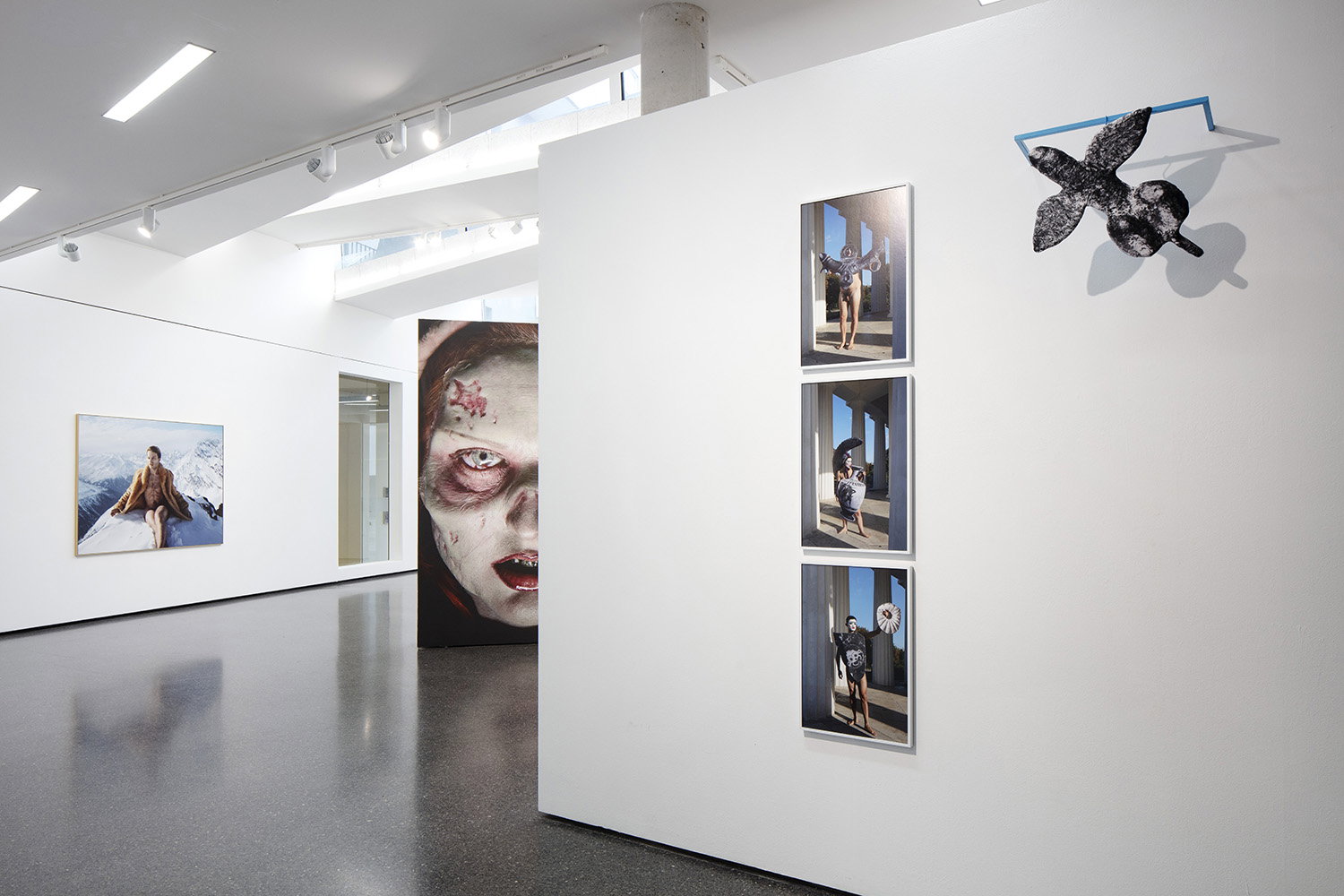
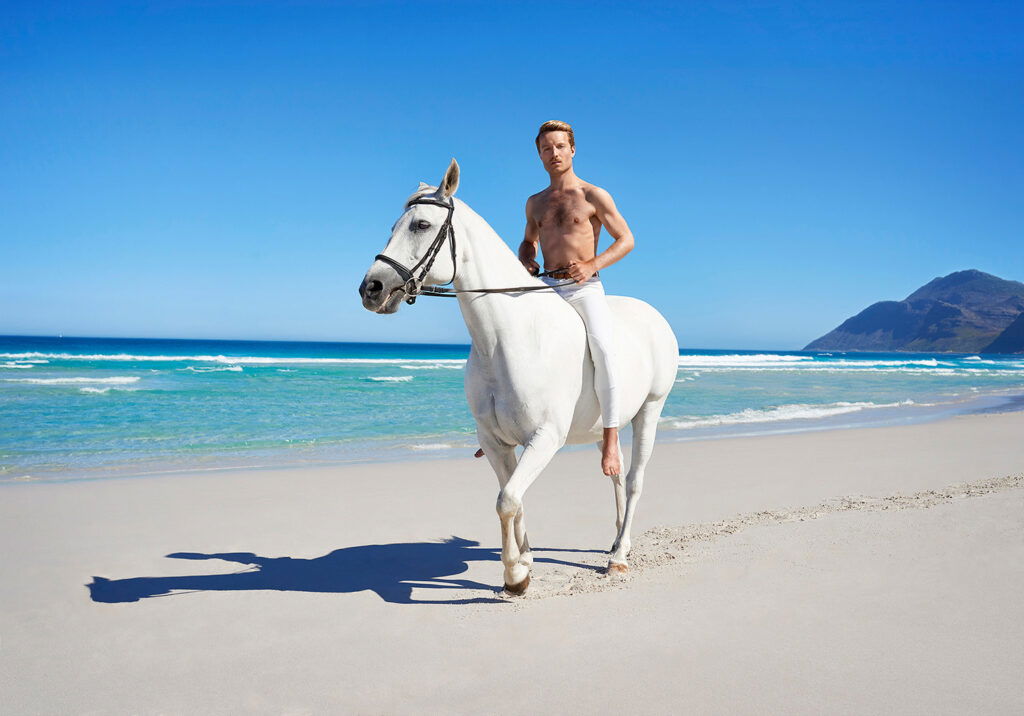
In his work, Andy Kassier explores the performative construction of success, masculinity and authenticity. In his long-term performance, Kassier uses his fictional character to develop an ironically role that parodies societal notions of wealth, self-improvement and social advancement. Under the motto “Success is just a smile away,” Kassier creates blockbuster-style photographs such as “White Horse”, “Just Swinging” and “Mr. Getty” continuously publishing them, including on Instagram. In these works, he stages himself as a businessman in a tailored suit, wearing a fur coat on the snow-covered peaks of the Stubai Glacier, or posing in front of luxury real estate. Locations such as the Raffles Hotel Singapore, reputedly one of Michael Jackson’s favorite hotels, or the Getty Villa function as ready-made stages of a global culture of success. At the same time, these settings point to the superficiality of such environments and to the constructed nature of social ideas surrounding luxury and cultural capital.
The photographic image does not mark the conclusion of the work; rather, it serves as the starting point for an ongoing performance in both real life and digital space. By uploading and circulating the images on social media, the individual photographs condense into a continuous narrative. Instagram itself becomes part of the artwork and a digital stage for performative self-construction. At the same time, Kassier transforms the photographs into luxurious image objects with hand-polished metal frames, which themselves become part of the representational culture to which his work refers.
Florian Aschka & Larissa Kopp
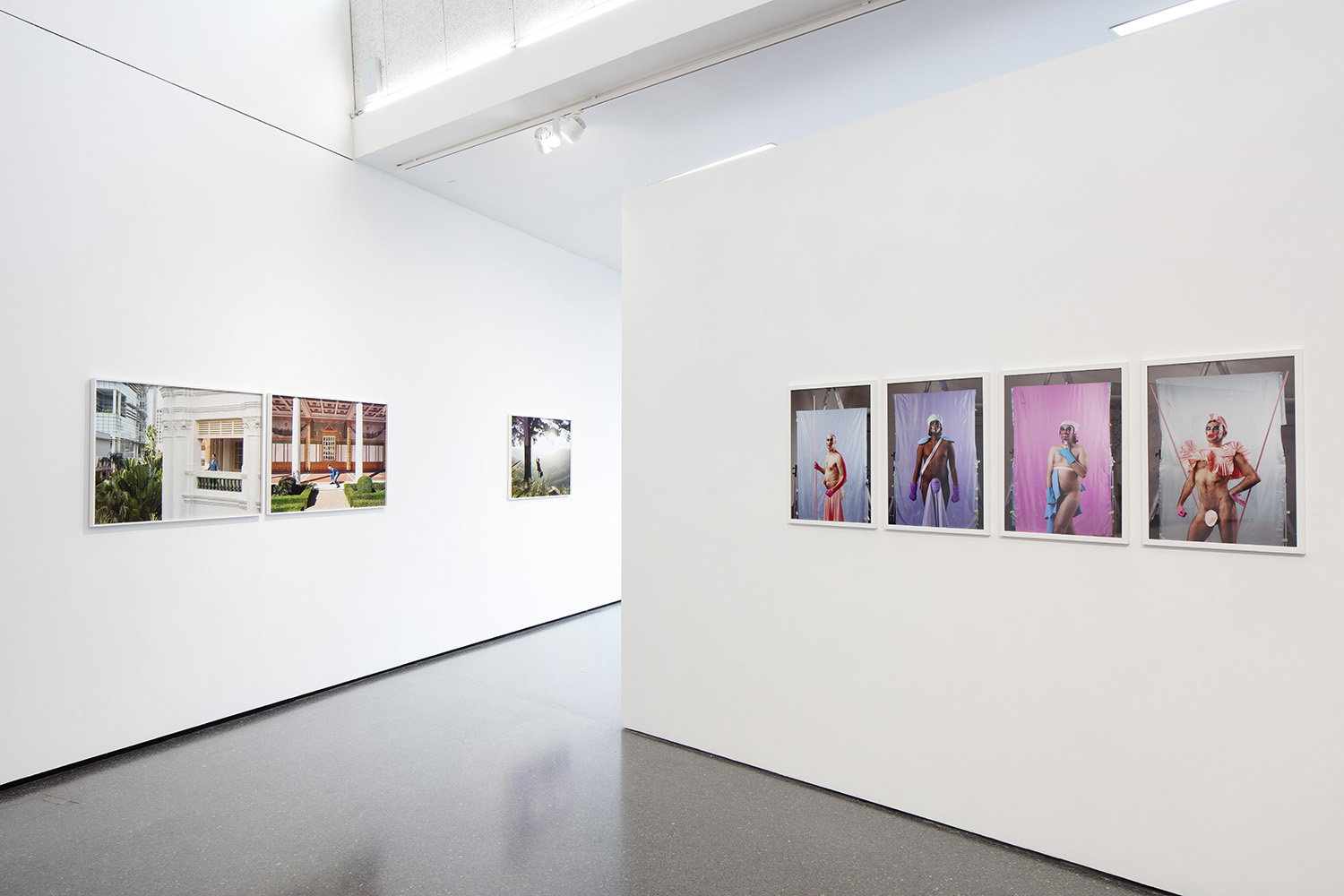
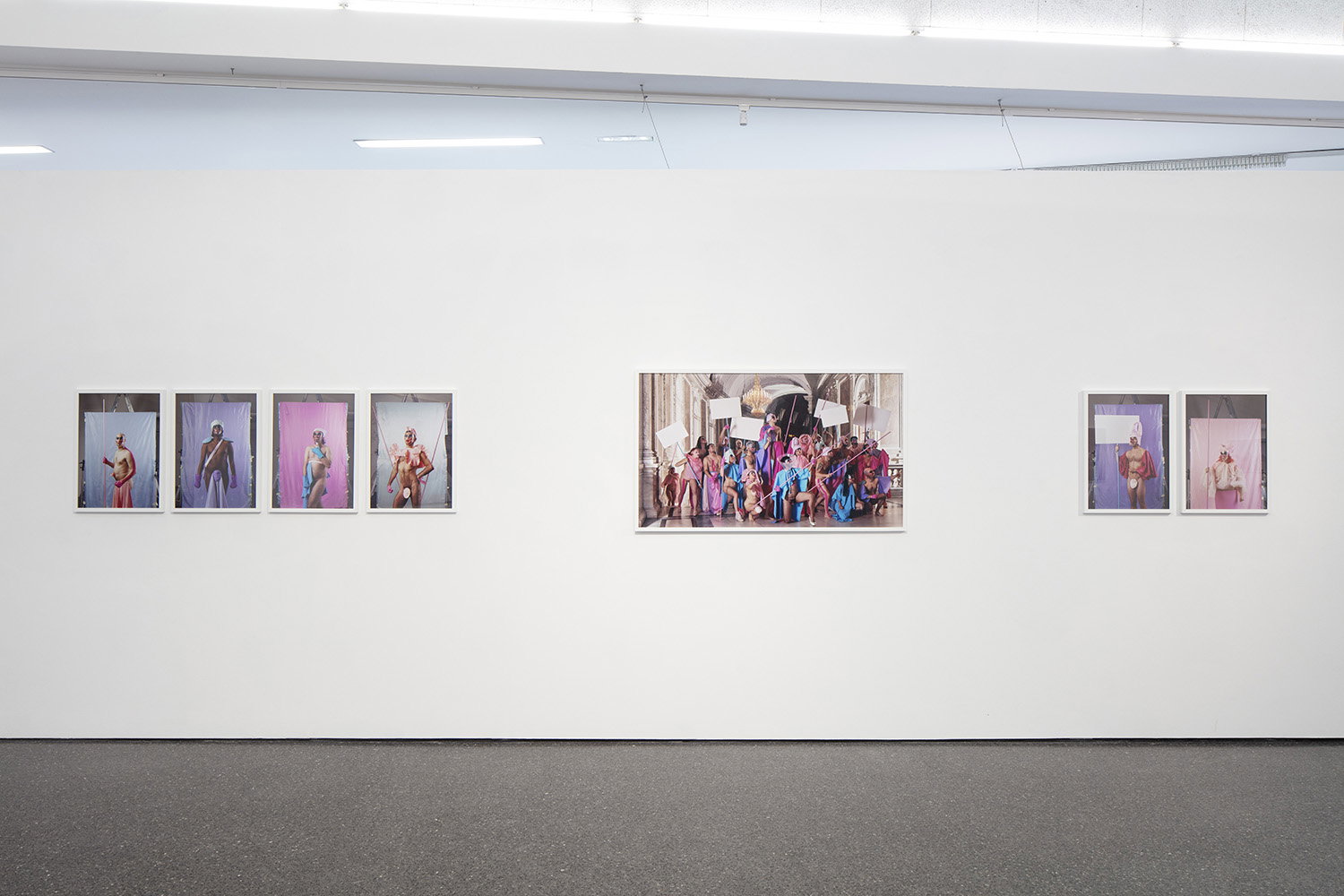
Whilst Kassier explores digital spaces as a stage for self-expression, Florian Aschka & Larissa Kopp adapt historical and institutional spaces for their queer-feminist photo-performances. These consist of planned performative actions in public or institutional spaces that are specifically staged for the photographic image. The photo performance functions as a kind of temporary pop-up performance for the camera. The focus is not on individual photographs but on image sequences and series in which performers and movements become visible and choreographic elements can be traced within the photographic image. In “Queer Revolutionaries…?”, representative locations such as the grand staircase of the Neue Burg and the Kunsthistorisches Museum Vienna become sites of their work.
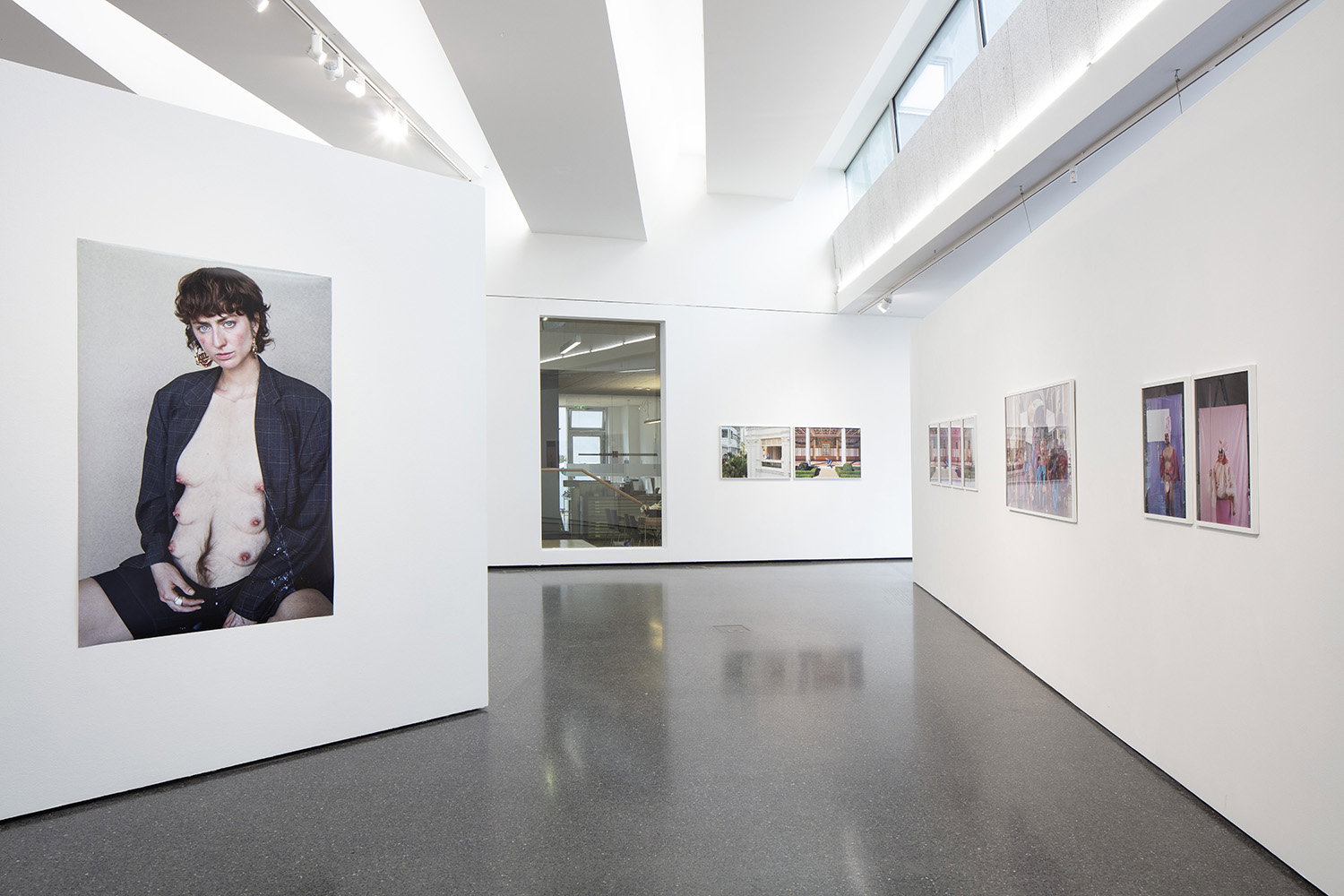
In carefully composed group and individual portraits, they draw on the visual language of Neoclassical revolutionary paintings and quote their gestures of departure and resistance. The performers appear in hairdressing capes, highlighting caps, and body-hugging costumes drawn from beauty and self-optimization culture, which simultaneously evoke historical armor. Masks featuring stereotypical heteronormative facial traits merge with the performers’ bodies to create gender-hybrid identities. The work oscillates between resistance and conformity. While the figures symbolically appropriate these representative spaces, they remain bound to social norms and bodily ideals. The photographs thus address the ambivalence of queer visibility and ask what possibilities exist for political self-staging within established systems of power and representation.
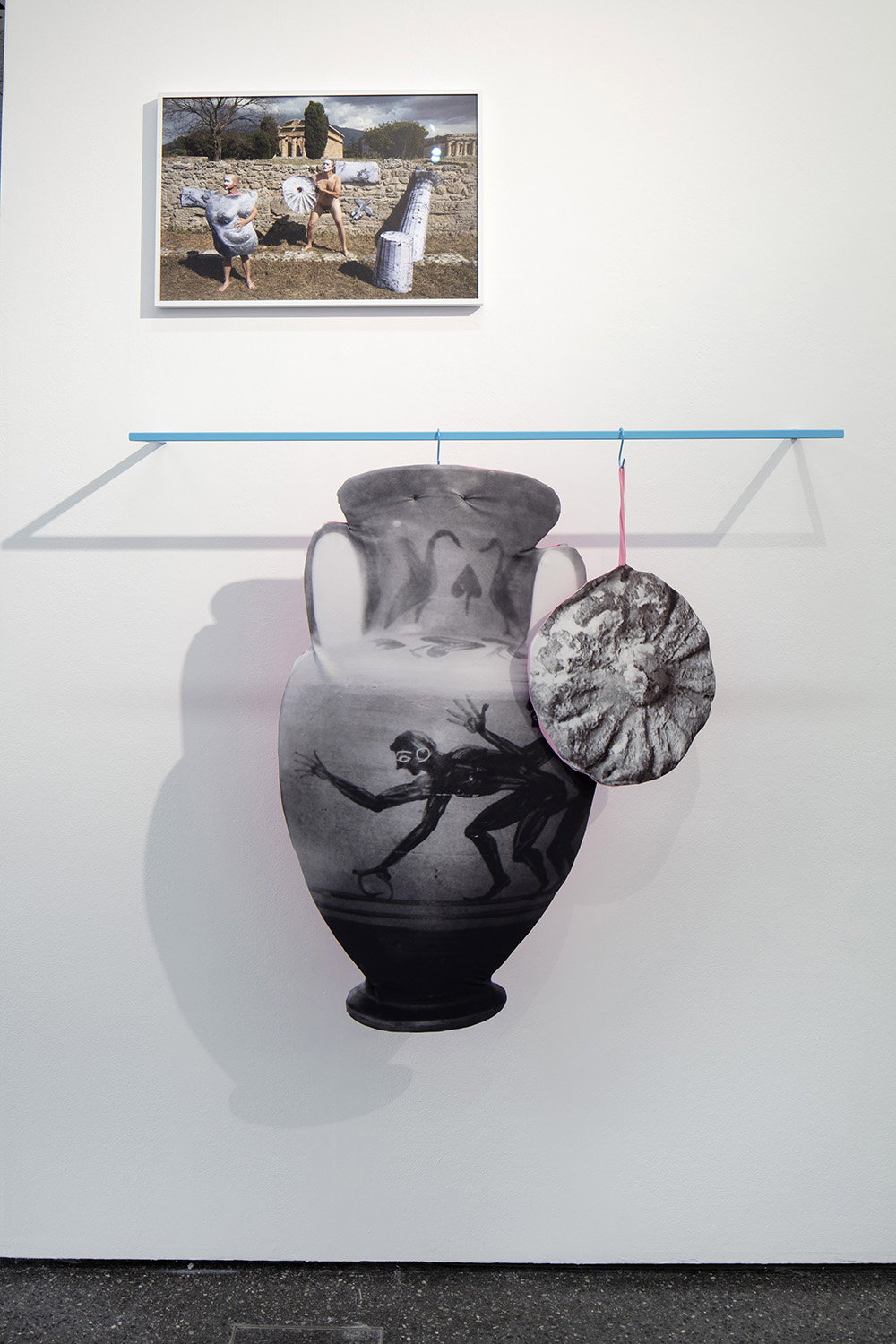
In “Dirty Godesses / Freud and the Secret Cabinet”, Aschka & Kopp engage with Sigmund Freud’s collection of antiquities and the cultural and psychoanalytic narratives associated with it. The project is rooted in Freud’s intensive engagement with ancient Greek culture, its mythologies, and archetypal imagery, which shaped many of his psychoanalytic concepts. At the same time, the work questions the patriarchal and heteronormative notions of gender and sexuality underlying Freud’s theories.
The photographic stagings depict queer bodies in ancient settings, visually merging with their costumes. The surfaces of the costumes are printed with photographs of archaeological artifacts from Freud’s collection and the National Archaeological Museum of Naples, including phallic amulets and satyrs. As bodily extensions of the performers, these motifs point to cultural projections of gender and sexuality as well as to mechanisms of social repression. The costumes are also part of the installation in the exhibition space and may be worn by visitors. In this way, the performative staging extends beyond the photographic image and into the exhibition itself.
Milena Wojhan
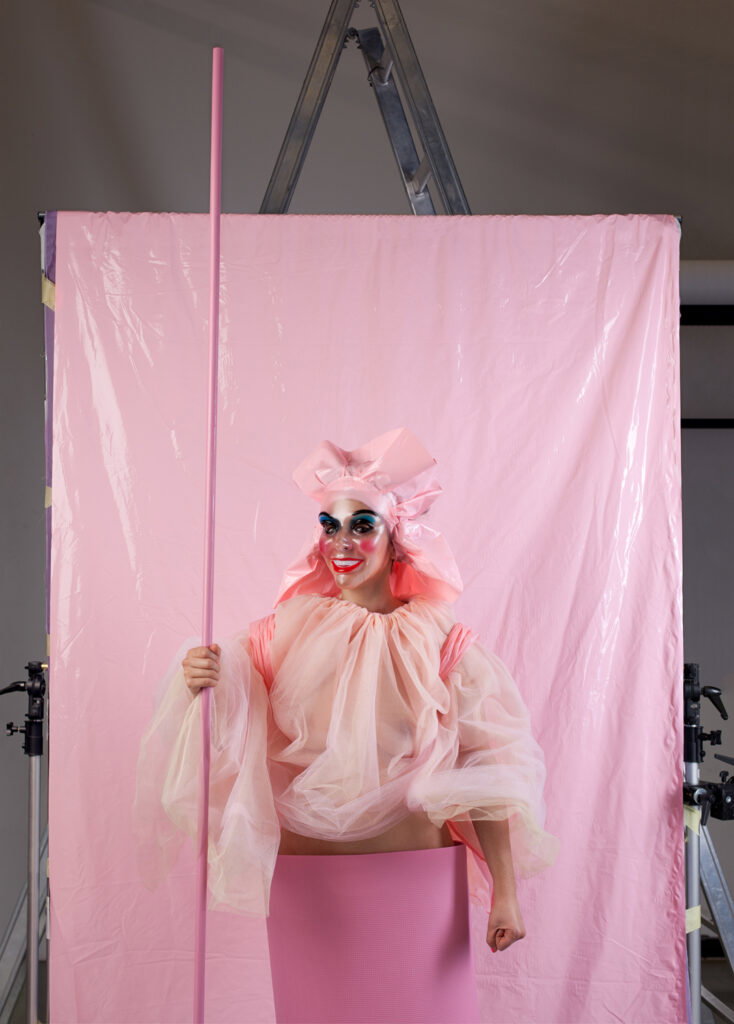
Milena Wojhan’s works likewise engage with cultural projections and socially constructed body images. Through masks, prosthetics, and performative stagings, she creates bodily representations that offer possibilities for transformation and empowerment.
In “Lupa”, created in collaboration with makeup artist Maxi Schwarzkopf, Wojhan revisits the Roman foundation myth of Romulus and Remus, who, according to legend, were raised by a she-wolf. The work is based on an alternative interpretation of the myth, according to which “Lupa” refers not to a she-wolf but to a prostitute. Through embodying this figure, Wojhan examines how femininity and cultural narratives are historically overwritten and socially coded. At the same time, the work points to the significance of queer-feminist perspectives within cultural and historical narratives that have long been predominantly shaped by patriarchal viewpoints.
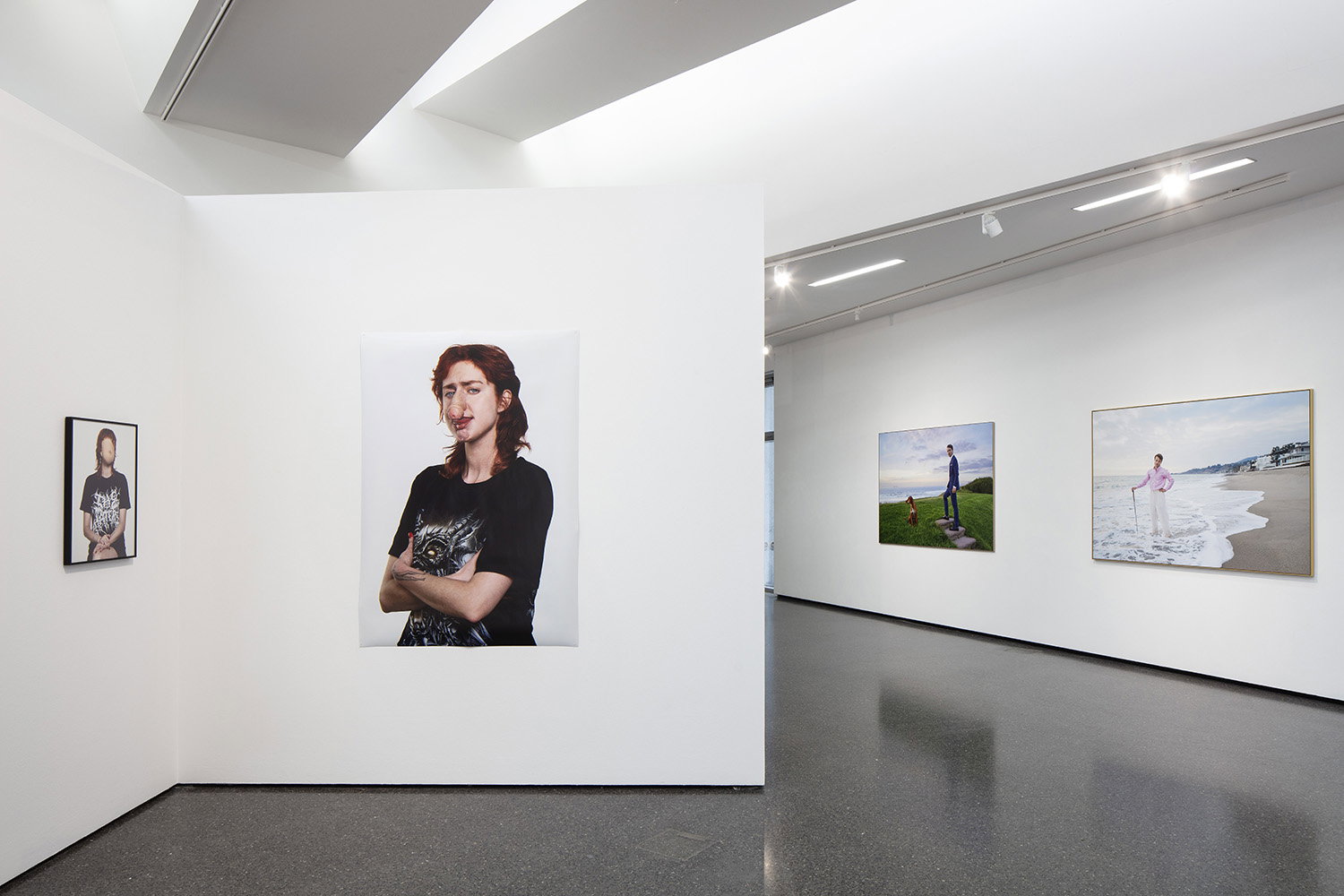
Questions of gender attribution and unequal visibility are also explored in “Artist Portrait (Approved)” and “The Haters”. In “Artist Portrait (Approved)”, a penis prosthesis replaces the nose, ironically referencing the historically male-dominated image of the artist as a genius. In “The Haters”, by contrast, the woman’s face disappears behind an oversized breast prosthesis. Individuality is overshadowed by sexualized bodily features and becomes the object of social projections and judgments.
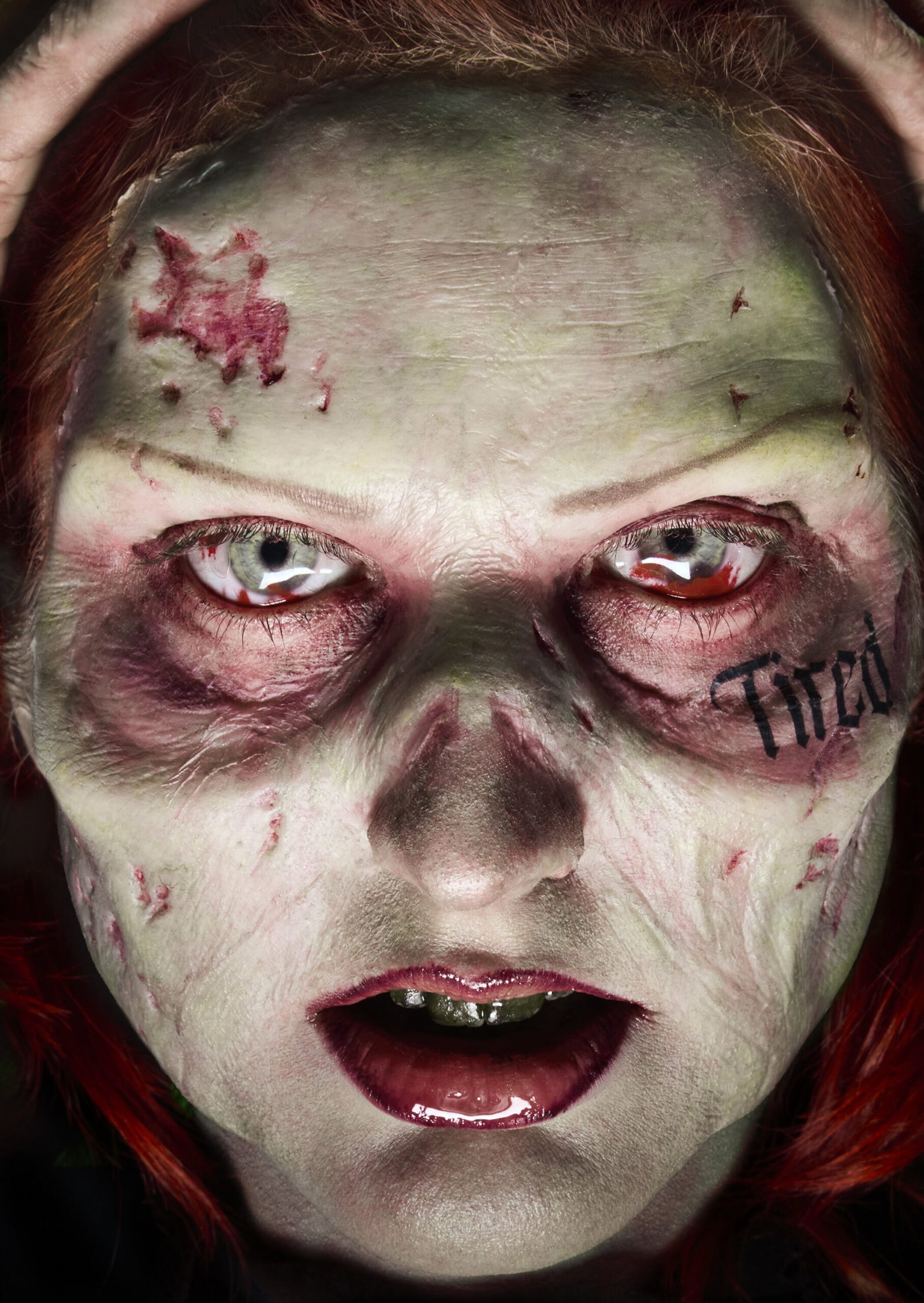
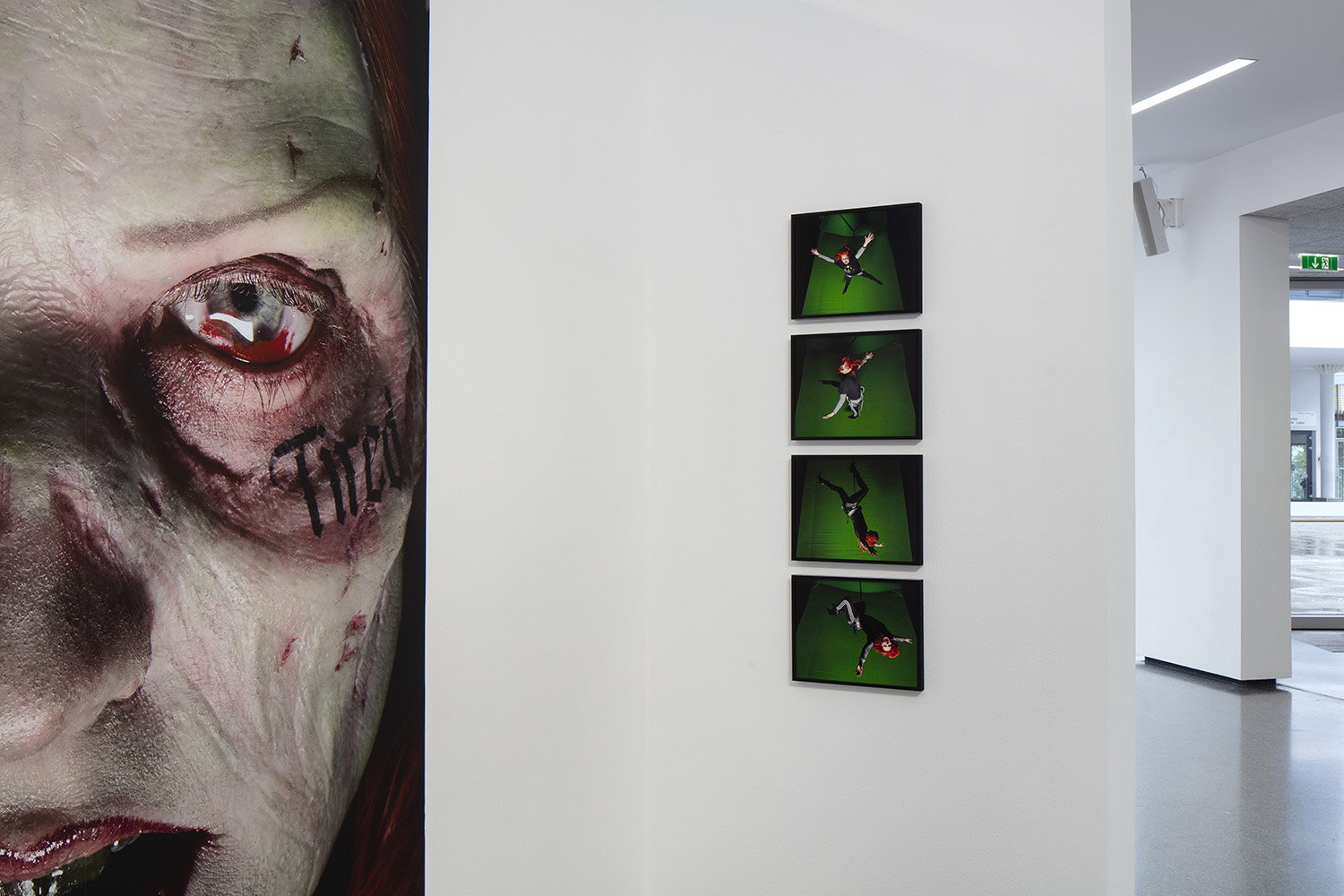
In “I really, really love paradise”, Wojhan presents photographs that originated from a performance of the same title. The images depict the artist wearing a grotesque zombie mask beneath whose left eye the word “tired” is inscribed. In an accompanying image series, the same figure appears freely falling in front of a green screen. The work addresses artistic self-staging as well as emotional overload and exhaustion within the precarious conditions of cultural production. The photographic images function as autonomous continuations of the various performances from which they emerged.
The connection between performance and photographic staging ultimately culminates in the performance “Too Much”, which takes place exclusively during the exhibition opening. Unlike the photographic works, in which performative actions are translated into images, “Too Much” brings the technical and performative conditions of photography itself back into the space of live performance. The costume was created in collaboration with Elena Scheicher, while the special-effects mechanics were developed together with Josua Rappl.